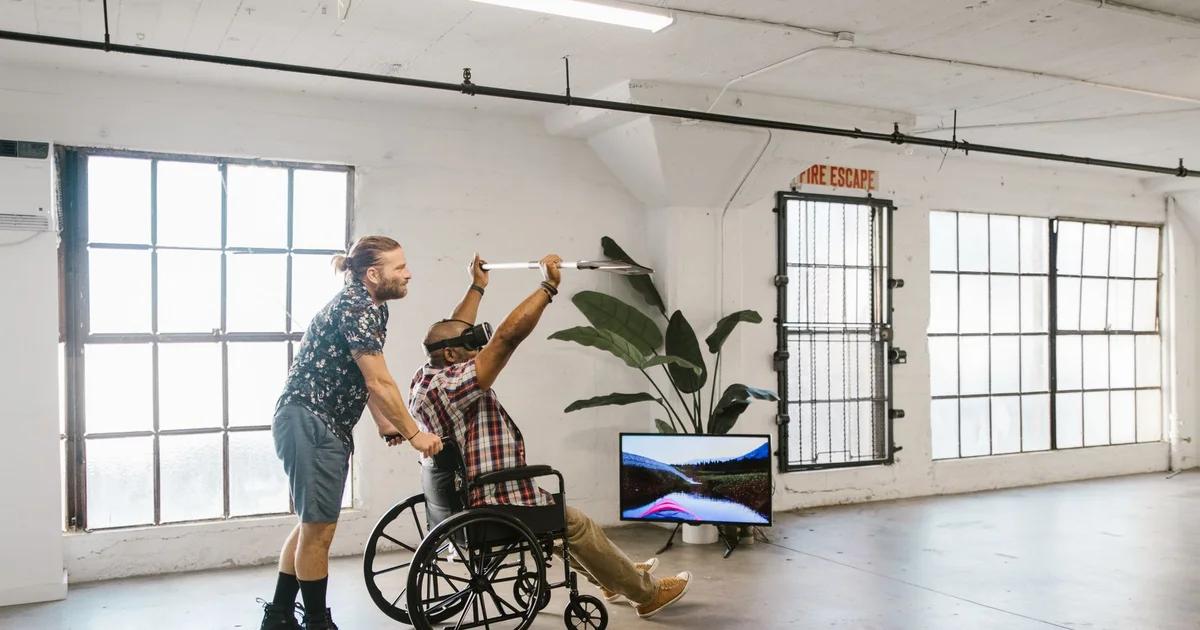
Bridging the Gap: Accessibility in Civic Immersive Technology
As municipalities and government agencies race to adopt Extended Reality (AR/VR) for urban planning, citizen engagement, and educational outreach, a critical challenge looms: accessibility. While these technologies promise a revolutionary 'digital twin' experience for constituents, they risk excluding millions of individuals if they do not adhere to established accessibility standards. For government entities, this is not merely a moral imperative but a legal requirement under ADA Title II.
The Legal Landscape of Spatial Computing
The Americans with Disabilities Act (ADA) does not explicitly mention VR headsets, but the Department of Justice has consistently interpreted Title II as applying to the services, programs, and activities of public entities, regardless of whether they are delivered physically or digitally. When a city provides a virtual reality portal to view future zoning changes, that portal must be accessible. If a resident with a visual impairment cannot navigate the virtual environment, the city may be in violation of federal law.
Core Pillars of Compliance
To ensure your civic AR/VR projects do not become liabilities, project leads must integrate these pillars into the early stages of development:
- Keyboard and Alternative Input Support: Never assume the user has fine motor control to manipulate 3D controllers.
- Text-to-Speech Integration: Spatial audio is insufficient if users cannot read or understand the UI. All immersive interfaces must pair with screen reader functionality.
- Captioning and Sign Language Avatars: For auditory content, visual alternatives are non-negotiable.
- Adjustable Sensory Input: Allow users to reduce flicker, adjust light intensity, and modify haptic vibration settings to prevent sensory overload for neurodivergent users.
'Digital equity is the cornerstone of trust in modern government. If we design environments that exclude the vulnerable, we are failing the very public we are meant to serve.'
Designing for Universal Access
Inclusive design is not an add-on; it is a foundational framework. When developing a civic VR platform, start with 'inclusive personas.' These are representative profiles of users with varying needs—such as those with low vision, limited range of motion, or cognitive processing differences. By testing prototypes with these personas, teams can identify friction points long before the beta launch.
The Role of WCAG in 3D Spaces
While the Web Content Accessibility Guidelines (WCAG) were originally designed for traditional 2D websites, their principles of Perceivable, Operable, Understandable, and Robust (POUR) are directly applicable to AR and VR.
- Perceivable: Can users understand the spatial data regardless of their sensory capacity?
- Operable: Can the navigation be performed via voice commands, eye-tracking, or simple switch devices?
- Understandable: Is the UI logic consistent, or does it change based on the virtual environment?
- Robust: Does the hardware interface work with third-party assistive software?
Practical Implementation Strategies
Transitioning from theory to practice requires a shift in procurement and development culture. When issuing RFPs for AR/VR software, agencies must include specific accessibility requirements. Ask vendors for their Voluntary Product Accessibility Template (VPAT) or a detailed conformance report. If a vendor cannot provide these, they are likely not prepared to meet the high standards of the public sector.
Managing Haptic and Visual Overload
For citizens with epilepsy or sensory processing disorders, high-intensity visual flashing or persistent haptic feedback can be physically harmful. Developers should implement a 'Safe Mode' toggle at the start of any VR experience. This mode should simplify graphical assets, stop unnecessary animations, and dampen haptic feedback. This simple inclusion significantly broadens the potential user base.
Future-Proofing Civic Infrastructure
As we move toward a world where civic engagement occurs in the Metaverse or via sophisticated AR city overlays, compliance must be viewed as an iterative process. Technology evolves rapidly, and so do the accessibility standards that govern them. Agencies should create a cross-departmental Accessibility Task Force that oversees all immersive projects. This task force should include IT professionals, policy advisors, and members of the disability community who can provide real-time feedback on user experience improvements.
The Economic and Civic Value of Inclusion
Investing in accessible AR/VR is not just a defensive legal measure; it is a proactive strategy for higher civic participation. When a city platform is accessible to all, participation rates increase. Residents who previously could not travel to a physical planning hearing can now participate from the comfort of their homes. This democratization of access strengthens the democratic process and ensures that policy decisions reflect the input of the entire community, not just the able-bodied demographic.
Ultimately, the goal of civic tech is to serve every citizen. By prioritizing compliance in your AR/VR roadmap, you ensure that the future of government is open, inclusive, and ready for everyone to participate in the digital age.