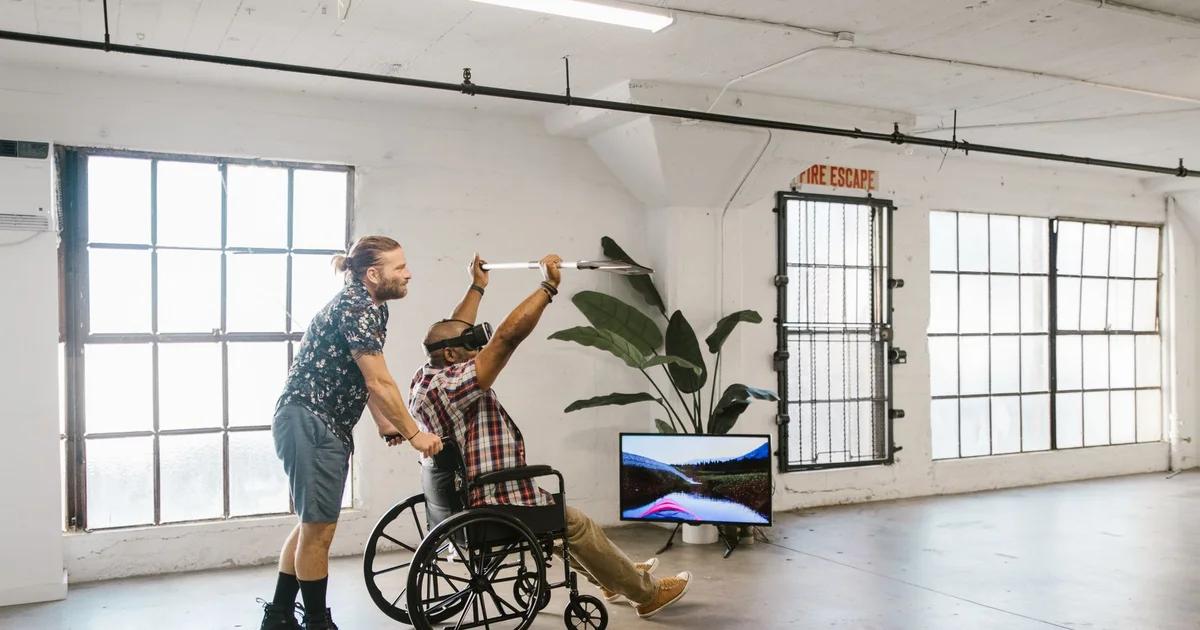
The Future of Public Engagement in Virtual Spaces
As municipalities and government agencies race to digitize their services, the emergence of Civic Virtual Reality (CVR) environments has promised a revolution in how citizens interact with public projects. From urban planning simulations to virtual town halls, these immersive spaces offer unprecedented opportunities for participation. However, if these environments are not designed with accessibility as a foundational pillar, they risk replicating the physical barriers that have historically marginalized residents. Creating accessible Civic Virtual Reality environments is not merely a legal requirement; it is a moral imperative for inclusive digital government.
Understanding the Accessibility Gap in VR
Virtual Reality is inherently a sensory-rich experience, often relying on high-fidelity visuals and spatialized audio. While this creates a sense of presence, it also builds potential walls for users with visual, motor, or cognitive impairments. For a government agency, ensuring that a virtual space is accessible means moving beyond standard web accessibility and addressing the unique complexities of 3D spatial navigation.
Challenges for Screen Reader and Assistive Tech Users
One of the most significant hurdles in VR is the disconnect between traditional screen readers and non-DOM based 3D environments. When a user navigates a virtual city proposal, how do they understand the context of the geography without clear, screen-reader-compatible spatial landmarks? Agencies must adopt open standards that allow assistive technologies to parse spatial data efficiently.
Motor Function and Gesture Control
Many VR platforms rely on complex gesture controls or rapid controller movements. For users with limited mobility or those who cannot use handheld controllers, these interactions are impossible. Inclusive design necessitates the inclusion of 'gaze-based' navigation, voice commands, and simplified controller mapping as standard features within any civic VR deployment.
The Framework for WCAG-Compliant Virtual Environments
While the Web Content Accessibility Guidelines (WCAG) were originally authored for 2D web interfaces, the principles of Perceivable, Operable, Understandable, and Robust (POUR) provide a necessary roadmap for VR. Applying these to a 3D context is the next frontier of civic innovation.
'Accessibility in virtual space is not about simplifying the design, but about multiplying the ways a citizen can experience the environment.' - Civic Tech Innovator
Perceivable Spatial Data
To ensure a space is perceivable, agencies must provide text-to-speech alternatives for visual cues. If a user is walking through a virtual model of a new public park, the system should audibly describe terrain changes, distance to landmarks, and ambient surroundings. High-contrast modes and adjustable color palettes should be toggleable within the environment itself.
Operability Through Multiple Input Channels
Operability in VR involves ensuring every action—such as selecting a planning option or submitting feedback—can be triggered in at least three ways: physical controllers, voice, and external keyboard/switch devices. By providing these redundancies, cities ensure that the virtual town hall is open to every constituent, regardless of their physical capabilities.
Building Inclusive Digital Governance
Technical compliance is only half the battle. A successful project requires a policy-driven approach to maintain accessibility as technology updates. Agencies should implement the following:
- Inclusive Procurement: Require accessibility compliance reports from VR vendors before onboarding them for city projects.
- Community Co-Design: Involve disability advocacy groups in the prototyping phase to identify pain points that developers might overlook.
- Continuous Monitoring: Establish a lifecycle management plan to update accessibility features as VR hardware and software frameworks evolve.
The Economic and Social Case for Inclusion
Investing in accessible virtual environments provides long-term dividends. By removing barriers, governments capture a broader range of public input, leading to better-informed urban planning and policy decisions. When the virtual environment is built for everyone, the cost of retrofitting and public criticism is significantly minimized, fostering greater trust between the citizen and the state.
Ultimately, the goal of Civic VR is to democratize participation. By embracing inclusive design principles today, government leaders can ensure that the next generation of civic engagement is truly representative of the communities they serve. Accessibility is not an add-on; it is the infrastructure upon which modern digital democracy is built.
Measuring Success Through Usability Metrics
Success should be measured beyond simple adoption numbers. Agencies should track time-to-task completion for users with disabilities, the frequency of assistance requests, and qualitative feedback gathered through post-engagement surveys. These data points provide a clear picture of how well a virtual environment is serving its diverse user base and identify areas for iterative improvement.
Sustaining Long-Term Engagement
Creating an accessible environment is the beginning of a cycle. As virtual platforms mature, so too must the standards we apply to them. Government agencies must stay agile, keeping pace with advancements in eye-tracking technology, haptic feedback suits, and AI-driven navigation aids. By fostering a culture of constant learning and adaptation, the public sector can lead the charge in making virtual spaces the most inclusive environments in the world.
Final Thoughts on Civic Innovation
As we look toward a future where more government services move into immersive digital spaces, we must remain vigilant against the emergence of new digital divides. By keeping accessibility at the center of our design strategies, we ensure that no citizen is left behind. The digital transformation of the public sector is only as strong as its ability to include all members of society, and in the world of VR, that means building environments that are fundamentally designed for human diversity.